Unknown's avatar

About Pádraig Floyd

I write about money, how we can grow it and ultimately hold on to it throughout the ever extending journey of life.

Honey bee hive nuisance pest could just save the world… 

It would appear that wax moths – an annoyance to beekeepers though a favoured bait for anglers – may just save humanity from the mess it has made of the planet.

See the story below for more details…  

The global plastic bag pollution crisis could be solved by a waxworm capable of eating through the material at “uniquely high speeds”, scientists have announced.

Source: Plastic-eating wax worm ‘extremely exciting’ for global pollution crisis

April swarm in Seven Kings – what’s it worth to a beekeeper?

https://www.facebook.com/plugins/post.php?href=https%3A%2F%2Fwww.facebook.com%2Fphoto.php%3Ffbid%3D10154785369628089%26set%3Da.133275208088.100125.559298088%26type%3D3&width=500

There is an old saying about swarms and their relative merits. It goes:

Now, there is some truth in such a saying, as swarms take time to collect, tie up kit and present the potential risk of disease to a beekeeper’s apiary. Therefore the earlier you can get and settle it, the greater it will repay the individual who collected it.
Late swarms are not much use and are generally a pain in the backside, hence the sage words of this 17th century proverb.
However, climate change – be it man made or a cyclical modulation – is changing the nature of our summers and swarm collectors are already being called out to swarms. This means we must adapt as our benchmarks all shift. Including the relative value of an early swarm.
Of course, I have yet to see it in the box, move it and home it, but we don’t have any indication of the potential value of such a prize.
So, any ideas? If so, post them below.

Pesticides found in US drinking water

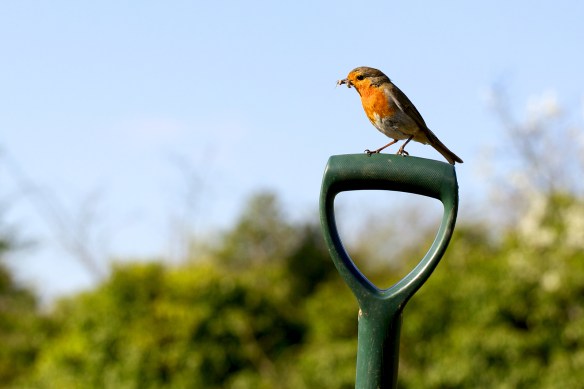
Robin on spade handleAt the weekend, I attended the Essex Beekeepers’ Association‘s Ted Hooper Memorial lecture to hear Dave Goulson speak on his research into neonicotinoid pesticides and their impact upon pollinators.

We briefly discussed research into these products – which he has demonstrated accumulate in soil and perennials – and the extent to which they may be leaching into the water supply.

Well, apparently, there is proof that they are. A study by the University of Iowa has shown that small amounts of neonics are to be found in drinking water in the United States.

Perhaps more worrying is that the filtration system used by the Iowa city treatment facility removes hardly any of the pesticides, though this can be effected by using a different system.

The researchers offer no conclusions for human health, but do raise questions about exposure and the need for more data on the toxicity of these chemicals.

Given the current administration in the White House, I wouldn’t expect there to be any rapid response to the potential dangers as this could jeopardise the powerful agri businesses that sell these products – products for which America’s farmland have been designed.

There has been a moratorium on these products being used by farmers in the EU for the last couple of years on flowering plants, but that may end once the UK leaves.

If you are worried what that means for your drinking water, perhaps you should ask your MP to find out what the water companies are expected to do with such contamination. And while you are at it, what they might be expected to do should levels increase.

But don’t be surprised if the answer is “nothing” and that they’ll cross that bridge when they come to it. If that’s the case, the consumer will have to swallow the costs – as well as the potentially poisonous water – to protect the water companies and agri-chemical businesses.

For the whole story, CLICK HERE.
 

Surgeon keeps his bees at work

stock-photo-gouda-holland-august-traditional-dressed-dutch-girl-on-a-cheese-market-gouda-has-a-332307275

My old Dutch mate, Tink (pictured), has just had a robotic arm fitted after breaking her collarbone*.

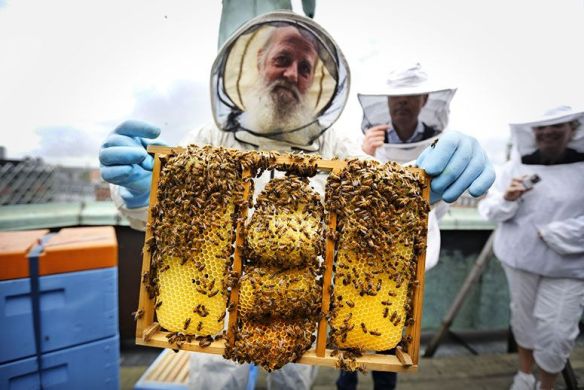
Anyway, it turns out her surgeon is a beekeeper and keeps bees on the roof of the hospital.

Then he sells the honey in the hospital shop, thereby raising money for a good cause and reintroducing honey into the medical establishment.

When my mum started training as a nurse in the late 1950s, honey was being phased out in favour of wonder drugs, otherwise known – and grossly over-prescribed – as  antibiotics.

Though honey seems to be making its way back into medicine in certain dressings, more people should try taking it to see how it may improve their overall health or wellbeing.

What’s the worse that can happen? Yes, their teeth rot and fall out, but only if they take it to excess and don’t follow proper dental hygiene guidelines.

Anyway, here is a clip of a video that shows the bees on the roof.

* Or some such procedure…